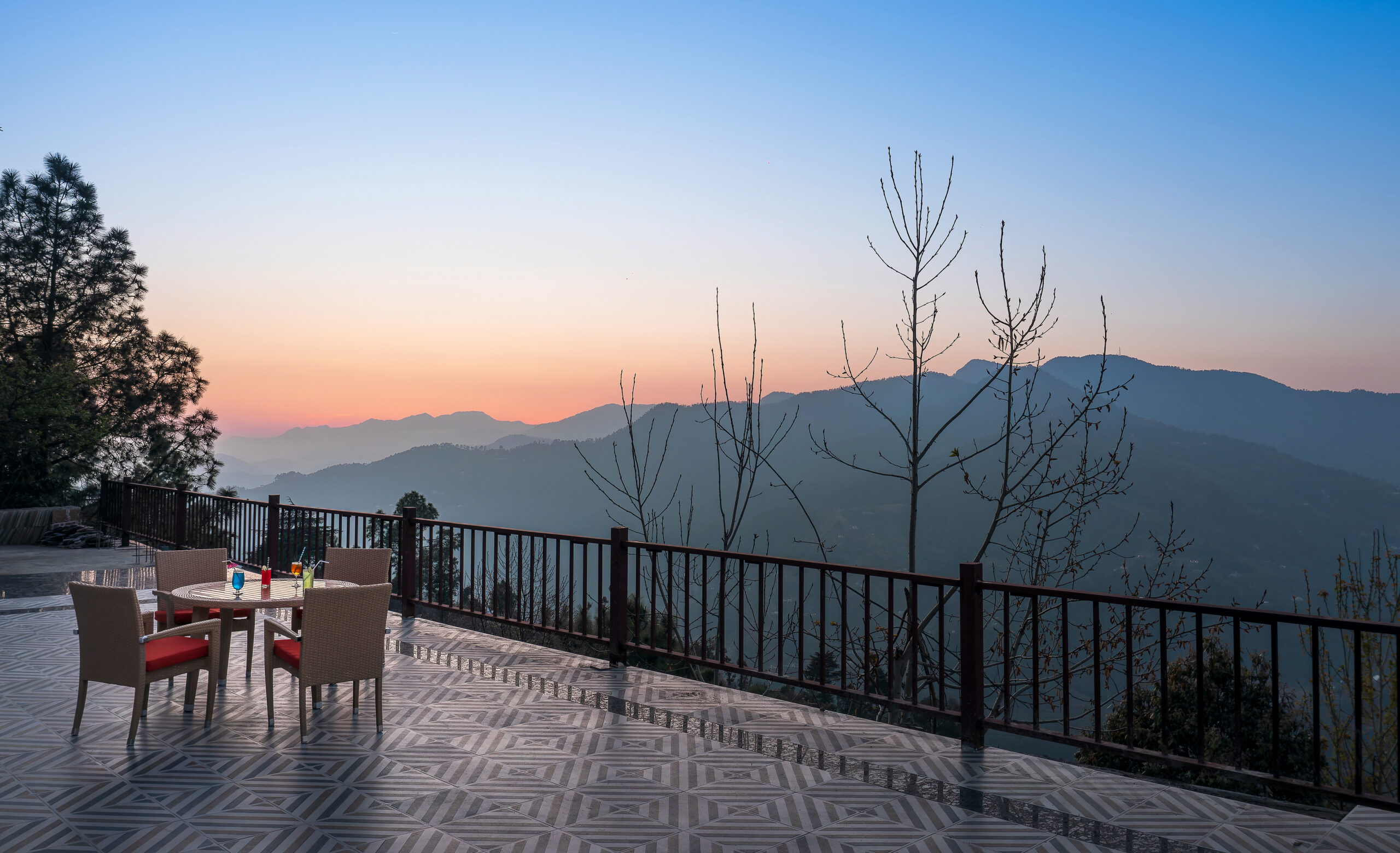
If you only have one question before planning a trip to Mukteshwar, it's probably this: when should I go? The honest answer is that the best time to visit Mukteshwar depends on what you came for. For the clearest Himalayan views, aim for October and November, or March and April. For blooming orchards and long green walks, April to June. For snow and cosy evenings, late December to February. Only the heart of the monsoon is worth skipping if mountain views are the whole point.
We write this from Digantaa, a resort at about 7,500 feet on a ridge above Dhanachuli, so we've watched every season roll across the same view. Here's what each one really feels like.
Why Is It Important to Choose the Best Time to Visit Mukteshwar?
1. Spring to Early Summer (March to June)
Best for outdoor activities
- Weather: Pleasant days and cool evenings, around 15°C to 27°C.
- Mountain Views: Generally good, although summer haze may affect visibility.
- Best For: Nature walks, orchard visits, birdwatching and family holidays.
2. Monsoon (July to September)
- Weather: Frequent rainfall, mist and damp conditions.
- Mountain Views: Often hidden behind clouds.
- Best For: Lush green landscapes, peaceful stays and wellness experiences.
3. Autumn / Post-Monsoon (October to November)
Best for Himalayan views
- Weather: Crisp, dry days with mild temperatures and cold nights.
- Mountain Views: Usually the clearest of the year.
- Best For: Himalayan views, sunrise photography and stargazing.
4. Winter (December to February)
- Weather: Cold days, around 3°C to 16°C, with colder nights.
- Mountain Views: Sharp and beautiful on clear days.
- Best For: Mountain photography, cosy stays and enjoying the winter atmosphere.
Temperatures change from year to year, so treat these as a guide and check the forecast a few days before you travel.

March to June: Green Hills, Blossoms and Long Walks
Spring in Mukteshwar is gentle. The cold of winter lets go, the days warm up without turning hot, and the hillsides fill with wildflowers while the orchards around the village come into bloom. It's the season when you can leave your jacket at the cottage for a few hours and just walk.
Mornings are usually the clearest, with the snow peaks standing sharp against the sky. By afternoon, clouds often drift in, so plan your view-gazing around sunrise and keep the rest of the day for forest trails, long lunches and a slow cup of tea on the sit-out.
This is also a lovely time for birdwatching, with the woods busy from first light. If that appeals, our guide to birdwatching in Kumaon covers the birds and trails around Mukteshwar.
One thing to know: this is peak season for families escaping the heat of the plains, so May and June weekends fill up early. Book ahead if you have fixed dates.
July to September: The Monsoon, for the Patient
Let's be honest about the rains. From July into September, Mukteshwar is wrapped in mist for long stretches, and the big Himalayan panorama is often hidden behind cloud. Roads can be slow after heavy downpours, and some outdoor activities pause when the weather turns.
But if you're not chasing peaks, the monsoon has its own charm. The hills turn a deep, almost unreal green, waterfalls run full, and the whole place goes quiet. It's a season for books, hot pakoras, long spa afternoons and sleeping to the sound of rain on the roof. At Digantaa, we run a four-day Monsoon Detox programme built around exactly this mood.
If you do travel then, keep a day or two of buffer in your plan and check road conditions before you set out. Skies often start clearing as September goes on, and the views return with them.
October and November: The Clearest Views of the Year
If mountain views are the reason you're coming, this is the window. Once the rains have washed the air clean, the sky turns a sharp, deep blue and the snow peaks seem close enough to touch. On a clear day you can pick out Nanda Devi, Trishul and the Panchachuli range along the horizon.
Days are mild and bright, and evenings turn properly cold, so pack warm layers. The light is golden in the late afternoon, which photographers love, and the nights are clear enough for real stargazing. It's also apple harvest season in the orchards around the region. Not sure where to point your camera? Start with our guide to the temples, trails and viewpoints around Mukteshwar.
The best way to spend a morning here is to be up before sunrise. At Digantaa, Dawn at the Edge takes you to a private viewpoint to watch the sun rise over Nanda Devi with a hot cup of tea and not much else to do but look. Autumn is popular, so it's worth booking early.
December to February: Snow, Silence and Woollens
Winter is Mukteshwar at its quietest. The air is cold and still, nights drop close to freezing in the coldest weeks, and crowds thin out. On clear days the range looks sharper than ever, with fresh snow on the higher ridges.
Snowfall is possible from late December through February, but it isn't guaranteed. Some winters bring heavy falls, others only a light dusting, so plan for the cold and treat snow as a bonus. After a heavy fall, roads can be affected, so check conditions before you travel and keep your schedule flexible.
Winter suits people who like their holidays slow: a warm cottage, a hot drink, a blanket on the sit-out and a sky full of stars at night. If you're thinking of ringing in the new year in the hills, see our guide to New Year celebrations in Mukteshwar.
So, What Is the Best Time to Visit Mukteshwar?
The best time to visit Mukteshwar for mountain views and nature is October to November, with March to April a close second. Past that, it comes down to what you want from the trip:
- Clearest Himalayan views: October to November, and March to April
- Flowers, orchards and green walks: March to June
- Snowfall and cosy winter stays: late December to February
- Stargazing: October to February, when the nights are crisp and clear
- Quiet, slow, wellness-focused stays: the monsoon and the weeks either side of it
How to Get the Best Views Once You're There
A few small habits make a big difference, whatever the season:
- Wake up early. Mountain views are usually at their best around sunrise, before clouds build up.
- Stay two or three nights. One cloudy morning shouldn't ruin your trip, and a longer stay gives you a second chance at the view.
- Check the forecast the day before, and be ready to move your plans around a clear window.
- Carry layers. Even sunny days turn cool fast at 7,500 feet.
- Bring binoculars if you enjoy birds or want a closer look at the peaks.
Why Digantaa works in every season
Digantaa sits on a ridge above Dhanachuli, so the view comes to you instead of the other way round. Our 41 cottages are named after the birds of Kumaon, from the cosy Tesia to the Elite cottages, whose large windows frame the whole Himalayan range. You can see them all on our accommodation page.
In spring and summer, there are forest trails, a kitchen garden to wander through and adventure activities for the energetic. In autumn, there are private sunrise viewpoints and clear night skies. In winter, there's a warm cottage and a hot cup of kahwa. And whatever the season, the food at Oregano comes from our own herb garden and farms nearby, so the menu changes as the hills do. Want a preview? Browse our photo gallery. For more ideas, read our guide to things to do in Mukteshwar.
Plan Your Mukteshwar Trip with Digantaa
There's no wrong season for Mukteshwar, only the right one for you. Come in October for the clearest mountains, in April for flowers and birdsong, or in January for a quiet, snow-dusted break. Whenever you choose, we'd love to host you.
Frequently Asked Questions
What is the best time to visit Mukteshwar?
March to June and September to November are the most popular windows. For the clearest mountain views, October and November are hard to beat. For snow, come between late December and February.
Which month has the best Himalayan views in Mukteshwar?
October and November usually have the clearest skies, right after the monsoon has cleaned the air. March and April are also good, especially in the early morning.
Does Mukteshwar get snowfall, and when?
Snowfall is most likely from late December to February, but it varies from year to year and isn't guaranteed. If snow is your main goal, plan for a few days in January and keep your dates flexible.
Is Mukteshwar worth visiting in the monsoon?
Yes, if you want greenery, mist and a quiet break, and you're fine with hidden views and the odd travel delay. If seeing the peaks matters most, choose autumn or spring instead.
How many days are enough for Mukteshwar?
Two to three nights is a comfortable stay. It covers the main viewpoints, a few nature walks and a clear sunrise or two, without rushing.